Drilling through fractured ground on the Copperbelt
Broken ground is where drilling contracts are won or lost. The metres still get drilled — but the intervals you most need are the ones most likely to arrive as rubble, or not at all.
Why fractured zones matter most
There is a cruel logic to exploration drilling: fracturing and mineralisation often travel together. The faulted, veined, altered intervals that carry the copper are also the intervals least able to hold together in a core barrel.
So poor recovery is rarely spread evenly. It concentrates precisely where your assays matter, which biases grade — usually downward, because fines wash away first. A programme reporting 95% average recovery can still have lost half the ore zone.
Triple-tube: the single biggest lever
A conventional double-tube barrel lets core rotate and grind against the inner tube. In competent rock this is fine. In broken rock it destroys the sample.
Triple-tube adds a split inner liner. Core enters the liner and stays there, undisturbed, and is extracted by splitting the liner rather than pumping the core out. Fragmented intervals arrive in the right order, in something close to their true state.
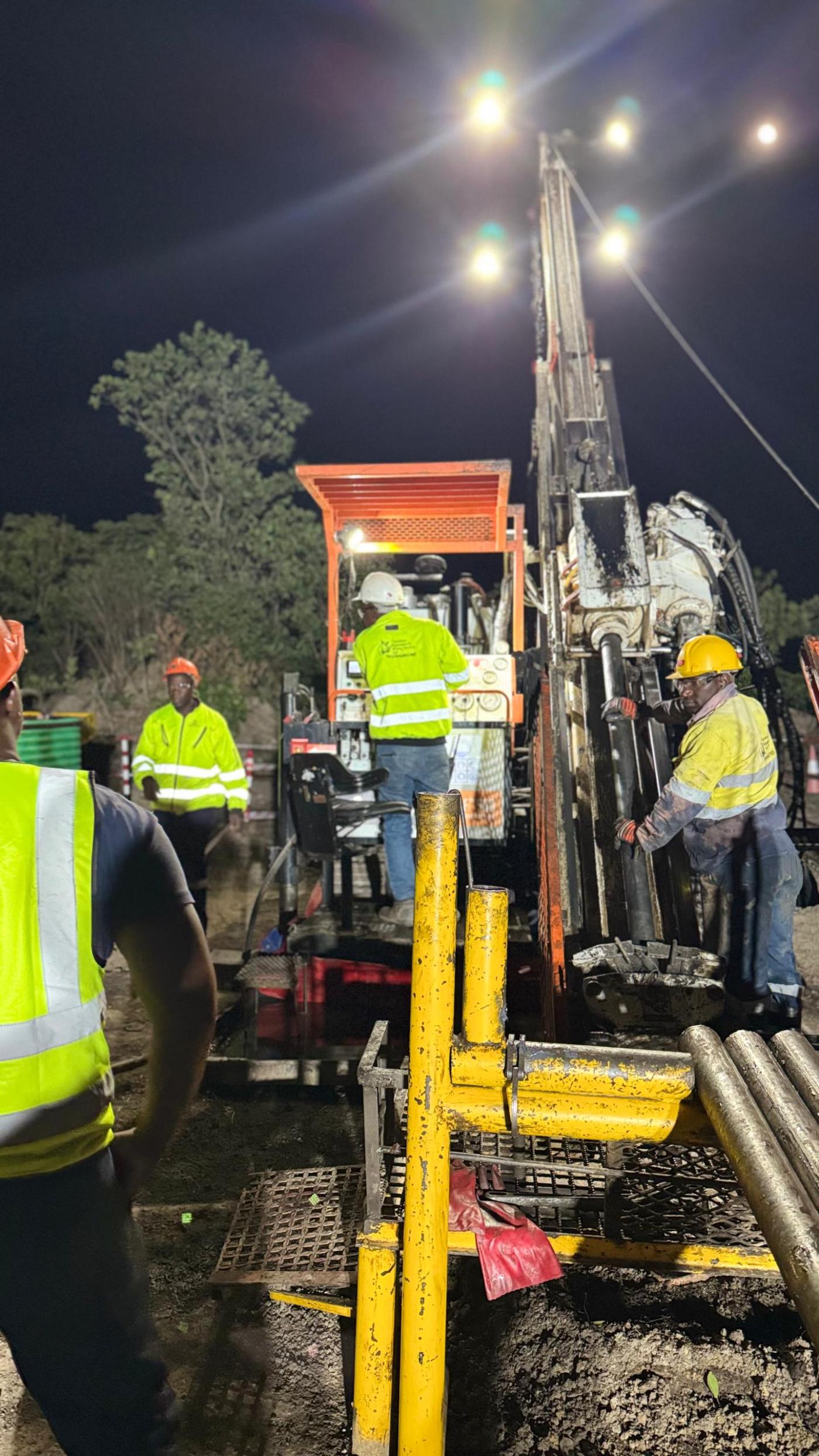
The critical part is not owning triple-tube — it is having it on the rig when the ground changes. At Kanyamata we held triple-tube on site for the whole programme and switched based on what the driller felt through the rods, not on what the plan said three weeks earlier.
Managing water loss
Fractured ground drinks drilling fluid. Lose returns and you lose cooling, cuttings removal and hole stability at once — and in remote areas you may be trucking that water a long way.
The responses are unglamorous and effective: adjust polymer to build a filter cake across the loss zone, reduce pump pressure rather than fighting the formation, case off persistent thief zones before they consume the programme, and plan water supply properly. At one North-Western site we drilled a solar-pumped borehole to supply a camp 2km away rather than run trucks all season.
Rate of penetration is a trap
Crews measured only on metres per shift will push through broken ground because stopping to change configuration looks like lost time. This is exactly backwards.
At Kanyamata our advance ranged from 9 to 45 metres per shift depending on what the rock allowed. The slow shifts were not failures — they were the shifts where the ground was difficult and the sample was preserved anyway. Measure recovery through mineralised intervals, not metres alone.
Field discipline that protects the sample
Fix problems on site, not next month
Difficult ground is hard on equipment. At Mingomba a main hydraulic pump failed mid-programme and was repaired on site within 24 hours — that hole still finished at 788.63m in under a month, averaging 28.59m per day across PQ and HQ. Response time in the field is worth more than any specification on paper.
Difficult ground on your project?
Tell us what you are hitting and at what depths. We will propose a barrel and fluid strategy before mobilisation rather than improvising once recovery drops.
Talk to our team